

Modernizing New Mexico’s Criminal Justice Information Systems
Most New Mexicans will never see the technology systems that power criminal history records, fingerprint identification, background checks and law enforcement information sharing. Yet, every day those systems influence everything from traffic stops and police investigations (officer safety) to foster care placements, employment screenings and court decisions.
At the center of that effort is the New Mexico Department of Public Safety, which serves as the state’s designated Criminal Justice Information Systems (CJIS) Systems Agency for the Federal Bureau of Investigation.
Leading that effort is Jessica Ann Mascareñas (Rodarte), the department’s CJIS Systems Officer, who oversees the administration, security and compliance of the state’s criminal justice information network. Mascareñas and teams from department’s Law Enforcement Records Bureau, Information Technology Division, and New Mexico State Police, with assistance from CJIS Information Security Officer Paul Herrera are spearheading a multi-year modernization initiative designed to replace aging technology, improve data quality and ensure New Mexico remains compliant with increasingly complex federal requirements.
“The public probably doesn’t realize how comprehensive it is,” said Mascareñas. “There are so many agencies that this data touches.”
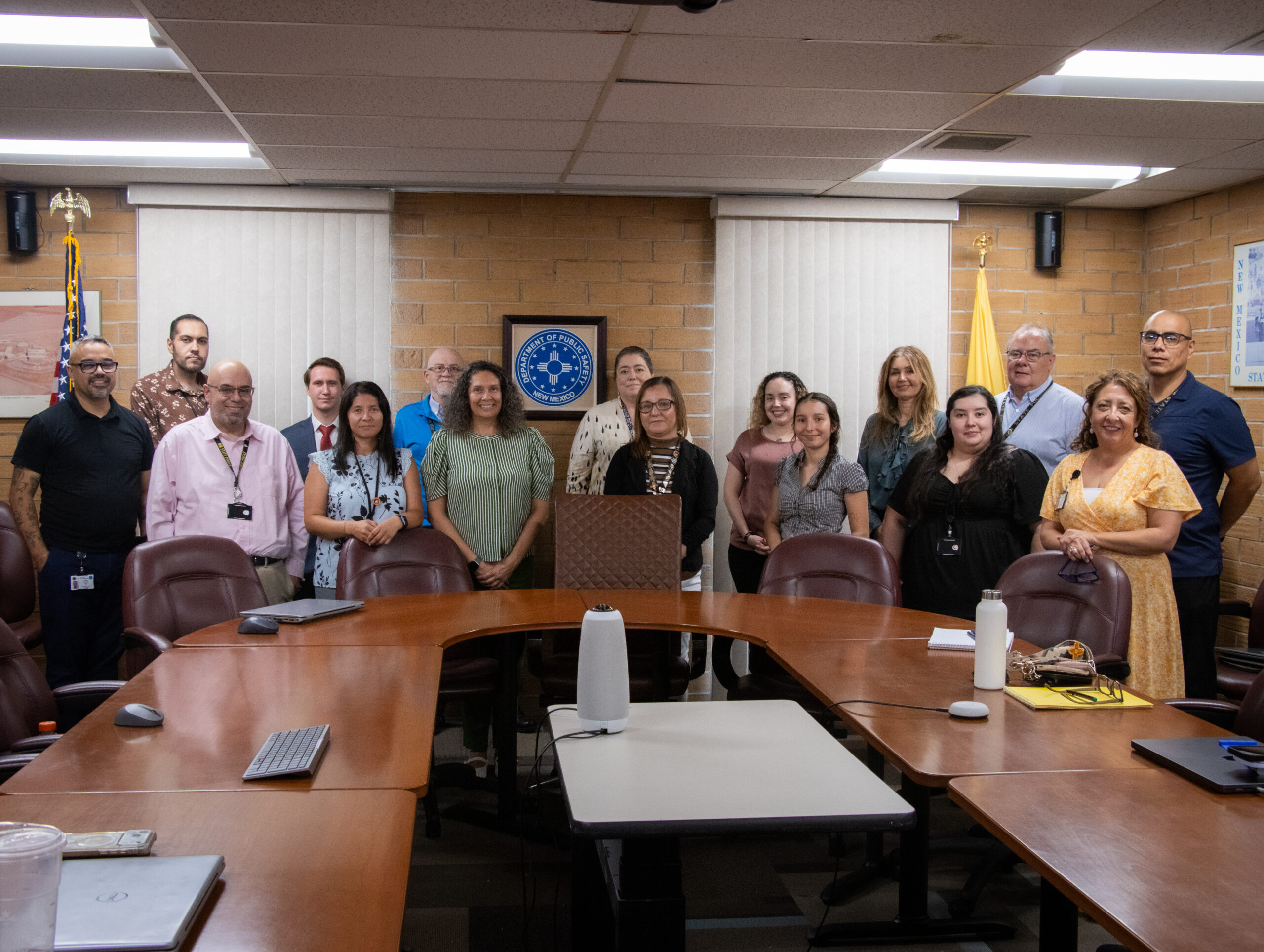 Jessica Mascareñas and teams from department’s Law Enforcement Records Bureau, Information Technology Division, and New Mexico State Police, with assistance from CJIS Information Security Officer Paul Herrera are spearheading a multi-year modernization initiative designed to replace aging technology, improve data quality and ensure New Mexico remains compliant with increasingly complex federal requirements. Front Row: Carlos Perez, John Tiernan, Anna Gurule, Katherine Roybal-Nunez, Jessica Morales, Francesca Lovato, Sabrina Cook, Tracy Lopez. Back Row: Octavian Valencia, Peter Messerer, David Lindie, Jessica A Mascareñas, Jenna Rivera, Marjan Farahmand, Terry Reusser, Mario Silva.
Hererra agreed: “We help roughly 1,000 criminal justice agencies across the state, from the largest police departments to the smallest rural sheriff’s offices, meet the federal requirements. The requirements cover things like background screening for personnel, security training, encryption, access controls, incident response, and regular audits. We consider those agencies our partners. When they succeed, the whole state is safer.”
The hidden infrastructure of criminal justice
As New Mexico’s designated CJIS Systems Agency, the Department of Public Safety acts as the state’s gateway to federal criminal justice information systems. While many people assume law enforcement agencies access FBI databases directly, the reality is that agencies throughout New Mexico access those systems through the department.
The agency’s responsibilities extend far beyond traditional law enforcement.
The New Mexico Department of Public Safety manages the state’s criminal history repository, fingerprint processing systems, sex offender registration data, missing persons information, background checks, citation systems and numerous databases used daily by local, state, tribal and federal agencies. The systems also support non-criminal justice organizations that rely on criminal history information, including schools, child welfare agencies, licensing boards and other state entities.
“We are responsible for ensuring that the data gets to courts, corrections, law enforcement agencies and non-criminal justice agencies,” said Mascareñas. “It’s an important job and we take it very seriously.”
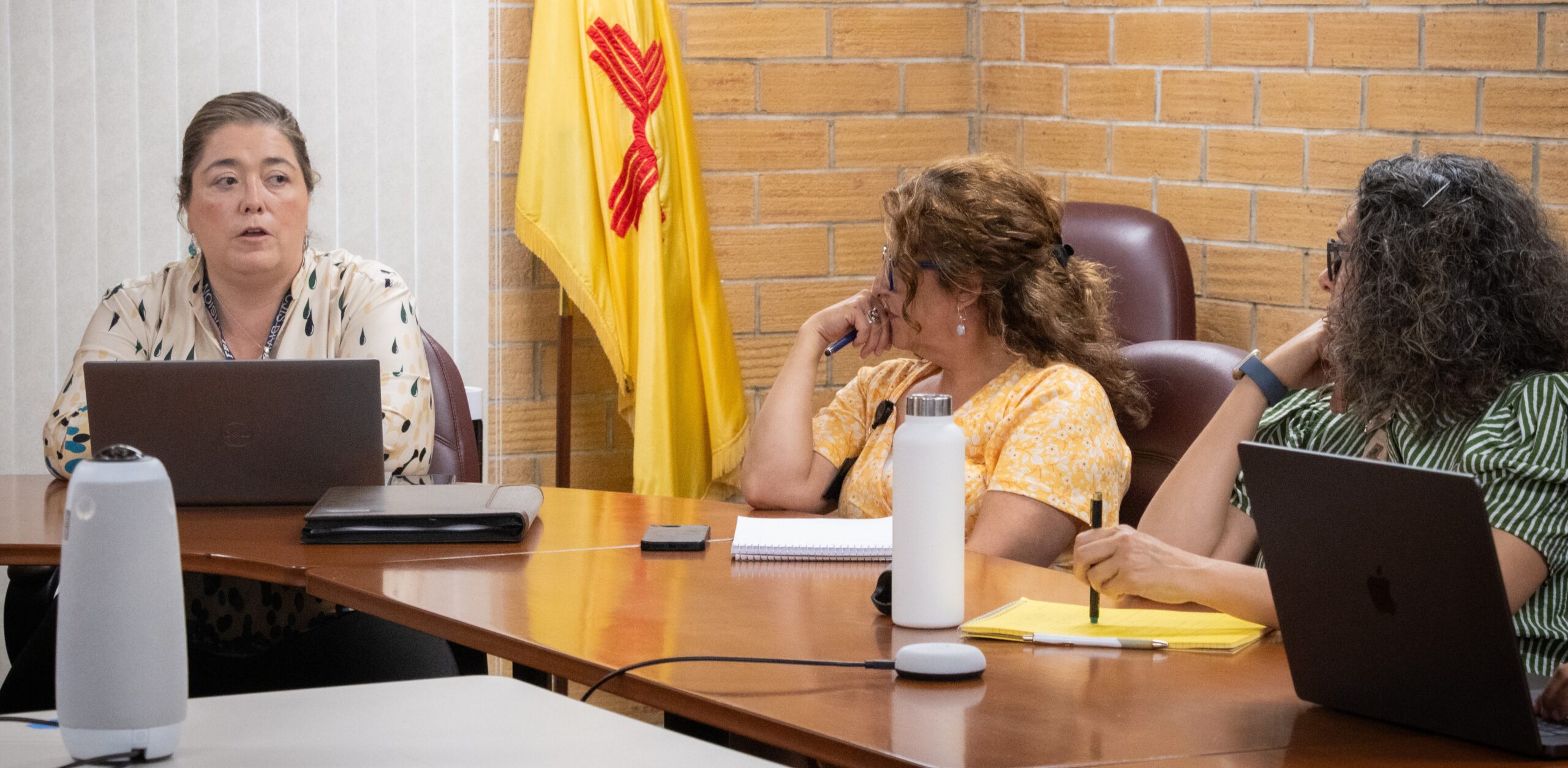 Jessica Mascareñas (far left) speaks at a recent CJIS meeting. Also pictured: Tracy Lopez and Katherine Roybal-Nunez (far right).
That responsibility includes maintaining the technology infrastructure, security controls, quality assurance programs, appropriate personnel access, audits and training required under FBI standards.
More than just law enforcement
One of the most significant responsibilities the department carries is overseeing fingerprint-based background checks throughout New Mexico.
When a person applies for certain jobs, licenses, foster care placements or adoptions, fingerprints are submitted through a statewide network managed by the department. Those fingerprints are compared against records in New Mexico’s criminal history repository and national databases maintained by the FBI.
The process can uncover criminal records regardless of where they occurred.
A person may have no criminal history in New Mexico but could have a serious felony conviction in another state. Fingerprint-based identification allows agencies to obtain a more complete picture than name-based searches alone.
“This information supports hiring decisions, professional licensing reviews, foster care placements, adoption screenings, sentencing determinations and numerous other public safety functions,” said Mascareñas. “It’s a lot of responsibility that the New Mexico Department of Public Safety carries.”
Aging systems, growing demands
The challenge facing the department is that many of the systems supporting these functions are decades old.
Some technology components currently in operation were developed more than 30 years ago and have received only limited updates over time. At the same time, federal security requirements governing criminal justice information continue to evolve.
Several years ago, the department found itself confronting compliance issues involving the state’s message-switch system, which routes criminal justice information to dispatch centers and officers in the field.
 From left to right: Peter Messerer and Octavian Valencia at the recent CJIS meeting.
As officials examined those challenges, they discovered that modernization was needed across multiple systems, not just a single application.
The result was the CJIS Modernization Program, a comprehensive effort that has been underway for approximately three years.
“It’s more of a program, not just a project,” said Mascareñas. “It’s updating multiple systems that have been neglected throughout the years. This modernization effort encompasses numerous technology upgrades designed to improve system reliability, security, interoperability and compliance with FBI standards.”
Closing critical information gaps
One of the most important initiatives within the modernization effort is the Disposition Project.
Working with the FBI, the department identified a significant problem affecting criminal history records in New Mexico: missing dispositions.
A disposition reflects the outcome of a criminal case after an arrest occurs. It tells courts, law enforcement agencies and employers with access to this information across the nation whether charges were dismissed, reduced, resulted in a conviction or led to incarceration.
According to Mascareñas, New Mexico currently receives disposition information for only about 32 percent of criminal cases, leaving roughly 68 percent of records incomplete.
That gap creates challenges across the justice system not only in New Mexico but across the entire country.
Officers may encounter individuals whose records show arrests but not final outcomes. Judges may lack a complete criminal history when making sentencing decisions. Employers and licensing agencies may receive incomplete background information.
“It’s not good for officer safety. It’s not good for judges who need to make decisions on sentencing, and it is not good for employment determination,” said Mascareñas. “The effort will improve public safety, increase data accuracy and strengthen decision-making throughout the criminal justice system.”
The Disposition Project seeks to improve the flow of information between law enforcement agencies, courts and criminal history repositories so that records more accurately reflect case outcomes.
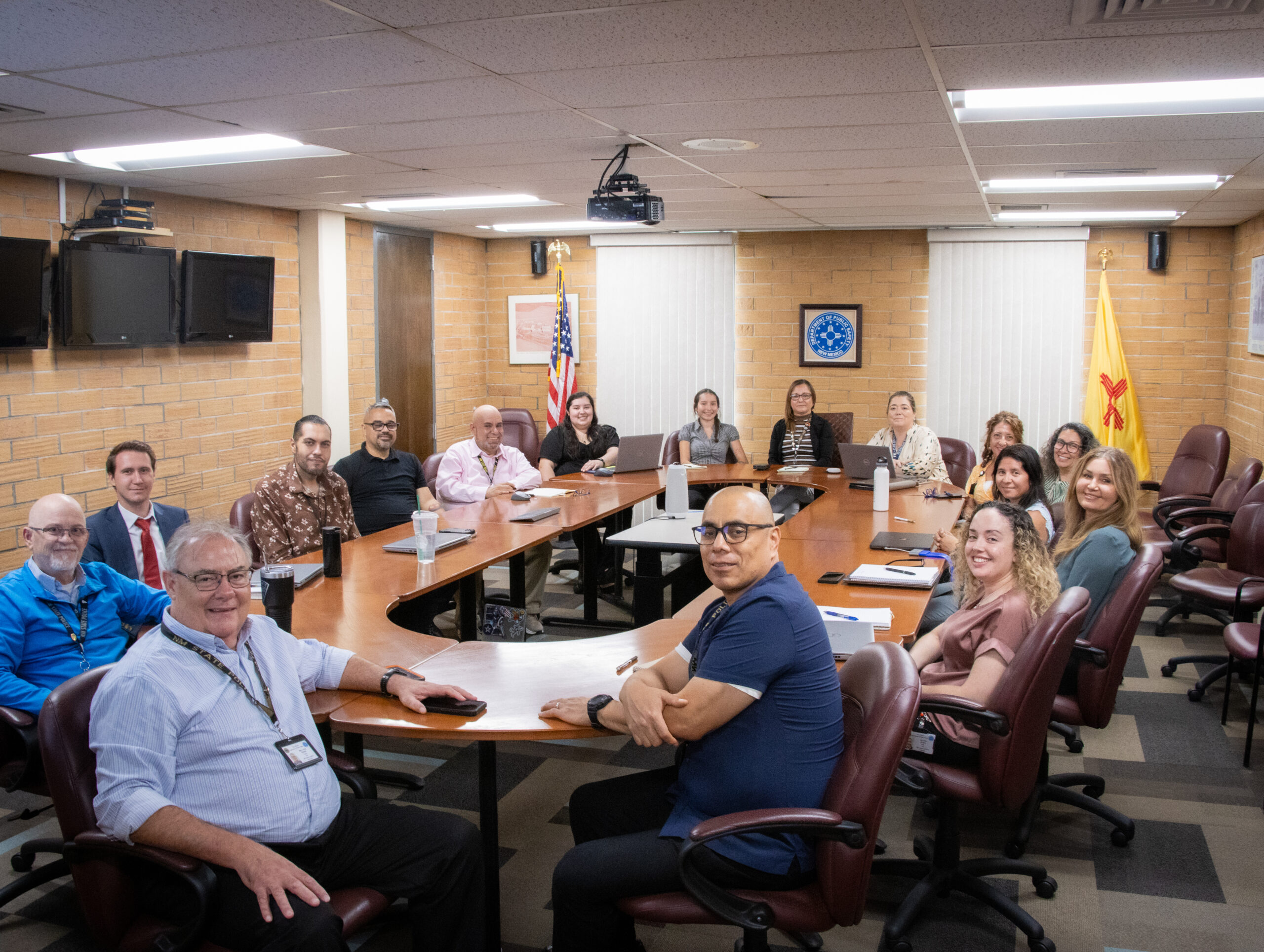 Teams from department’s Law Enforcement Records Bureau, Information Technology Division, and New Mexico State Police at a recent meeting about the modernization of CJIS.
Strengthening security and accountability
Modernization is not limited to technology.
Over the past several years, the Department of Public Safety has also created its first dedicated auditing unit to evaluate compliance among agencies connected to New Mexico’s criminal justice information network.
The team oversees nearly 1,600 originating agency identifiers associated with criminal justice and non-criminal justice organizations statewide.
Auditors review security practices, training compliance, records management procedures and adherence to FBI requirements.
The effort reflects growing attention to cybersecurity threats facing criminal justice agencies nationwide.
Mascareñas said the department has encountered situations where agencies suffered ransomware attacks but failed to report them immediately because they were unaware of federal reporting requirements.
“Because criminal justice systems are interconnected, vulnerabilities at one agency can potentially affect access to critical information across the broader network,” said Mascareñas.
In response, the department has increased training, strengthened communication and worked closely with the state’s cybersecurity partners to improve awareness and compliance.
Doing more with limited resources
– in particular, the Automated Fingerprint Identification System unit as one example.
The state currently operates the system with just three employees who process both criminal and applicant fingerprints during regular business hours.
By comparison, Arizona staffs a similar operation with approximately 27 employees working around the clock. “Public safety isn’t an 8-to-5 operation, and the timely processing of this information is critical,” said Mascareñas. “When information is not processed promptly, criminal history updates, applicant results, and public safety decisions can be delayed or missed entirely.”
The disparity highlights the workload facing department personnel who support agencies across New Mexico while maintaining compliance with federal standards.
“The agencies are hungry to talk to people,” said Mascareñas. “They want guidance. They want help. They want to do the right thing.”
Mascareñas said both the CJIS modernization effort and the Disposition Project require continued support and investment if New Mexico is to maintain momentum. “These strategic investments are critical to ensure we keep our communities safe at all levels,” she said, adding that ‘DPS continues to advocate for funding during legislative sessions.’
Progress recognized by the FBI
Every three years, the FBI conducts audits of state CJIS systems to ensure compliance with federal standards governing criminal justice information.
The agency recently completed its latest review of New Mexico’s systems.
According to Mascareñas, the feedback from federal officials has been overwhelmingly positive.
“The FBI has been in communication with the New Mexico Department of Public Safety for a long time,” she said. “The feedback that I’ve gotten from the FBI has been that the state has made ‘leaps and bounds’ in the past three years. New Mexico has done a complete 180.”
Mascareñas attributes the improvement to stronger leadership, greater engagement with local agencies, increased training and a renewed focus on compliance and communication.
For years, she said, many agencies lacked guidance on how to navigate federal requirements or implement new technologies. The department has worked to change that by becoming a more active partner and resource for agencies throughout the state.
“While there is still work to do, it is important to recognize the progress has been made,” said Mascareñas. “New Mexico has become a respected partner in national policy discussions involving many of the changes now being implemented across the state. Continued modernization will also require legislative support to strengthen public safety, compliance, and information sharing statewide.”
A foundation for public safety
Deputy Cabinet Secretary Sylvia Serna said the modernization effort represents one of the most important public safety initiatives currently underway within the New Mexico Department of Public Safety.
“These systems are the backbone of how criminal justice information is shared throughout New Mexico and across the nation,” Serna said. “Modernizing them helps ensure that law enforcement officers, courts, corrections officials and partner agencies have timely, accurate and secure information to make critical decisions that affect public safety every day.”
Serna said improvements to criminal history reporting, cybersecurity protections and system reliability will benefit not only law enforcement agencies but also schools, child welfare organizations, licensing boards and employers that rely on accurate background information.
“When we improve these systems, we’re improving public safety, accountability and the quality of information used throughout the justice system,” she said.
The work is far from finished. Continued legislative support will be necessary as the department upgrades decade-old systems, improves criminal history reporting and strengthens cybersecurity protections statewide.
But department leaders say the investment is essential because every arrest record, fingerprint submission, background check and criminal justice transaction depends on systems that most New Mexicans never see.
For Mascareñas, the mission is straightforward: ensure that judges, social workers, health care providers, employers, and public safety officials have information that is accurate, secure and available when it matters
As the department continues its CJIS Modernization Program and Disposition Project, the goal is not simply replacing outdated technology. It is building a stronger, more reliable foundation for public safety across New Mexico.
Story by New Mexico Department of Public Safety Public Information Officer John Heil. Photos by DPS Media Relations Unit – Curtis Althaus.
Legal Disclaimer:
EIN Presswire provides this news content "as is" without warranty of any kind. We do not accept any responsibility or liability for the accuracy, content, images, videos, licenses, completeness, legality, or reliability of the information contained in this article. If you have any complaints or copyright issues related to this article, kindly contact the author above.
